
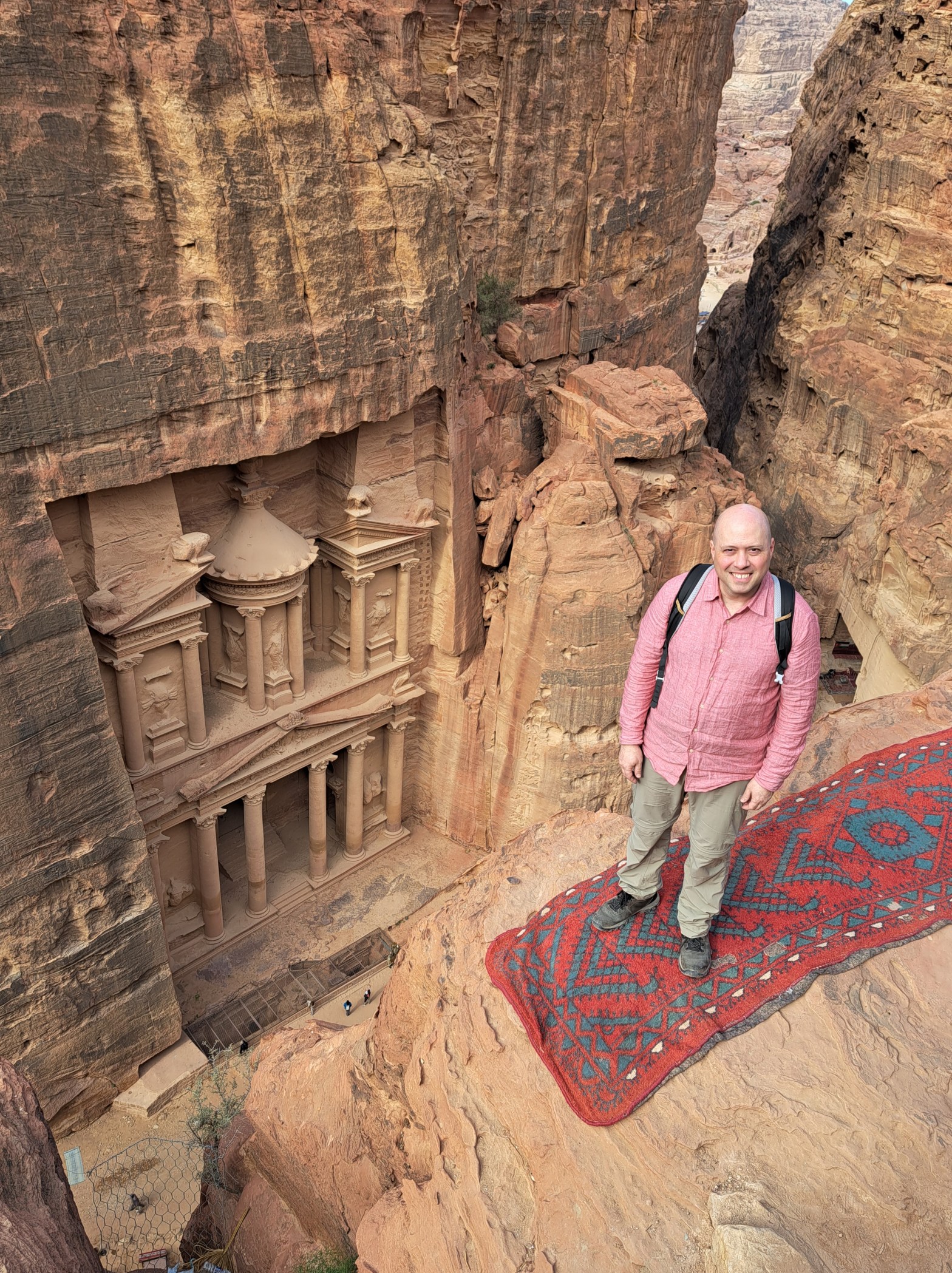
The next morning I heard about the strikes.
National strikes across Jordan. Protests against petrol prices. The highway between Petra and Amman — the only reliable route — was going to close. My flight to Tel Aviv left from Amman. The border crossing into Israel from Petra was open at unpredictable intervals. There was no certain alternative.
I made a decision within the hour: I was leaving that day. Whatever it took.
Something shifted when I made that call — a gear engaging, clean and automatic. Thirty years of military training doesn’t make you fearless. It doesn’t eliminate uncertainty or guarantee the right outcome. What it does is give you a framework for making a decision when the information is incomplete and waiting for clarity is its own kind of risk.
I worked with my hotel owner. We assembled a small caravan — a couple of taxis, a handful of tourists with the same problem — and we left Petra before the highway closed.
In hindsight, it may not have been as dire as it felt in the moment. I probably could have found another way. But I didn’t know that then, and waiting to find out carried a cost I wasn’t willing to pay. Sometimes the right decision and the certain decision are not the same thing. You choose anyway and you move.
———
The taxi driver who took me to Amman turned out to be a guide as well. What began as an evacuation became two days of unhurried exploration — Jewish and Christian sites across the Jordanian countryside, the Dead Sea, the hilltop where Moses saw the promised land before he died.
I was still carrying the adrenaline from the night before. Not fear — the danger had passed. Something more like heightened aliveness. Colors looked more saturated. Sounds were sharper. The landscape felt more present than landscape usually does.
I have heard soldiers describe this after operations. The world becomes briefly more real than normal. You notice things you would otherwise walk past.
A couple of days earlier in Petra, before the cat and before the escape, I had sat in a Bedouin family’s tent and shared tea with them. My guide that day was Bedouin himself and had told me about his people — their nomadic life, their hospitality, the way they hold their possessions lightly enough to carry everything they own from place to place. I had read about Bedouin culture many times. But sitting in that tent, with a few simple structures and a handful of handmade trinkets arranged around a family who seemed entirely unburdened by what they didn’t have, the abstraction became a person. Several persons.
I thought about how much I carry. How much most leaders carry. How much of it is essential and how much is weight we’ve accumulated without noticing.
The nomads seemed unburdened in a way I found quietly extraordinary. I was still thinking about it two days later, racing toward Amman in a caravan of taxis, watching the Jordanian desert pass at speed. What decision have you made under incomplete information that you still think was right — and how did you know it was time to move?


